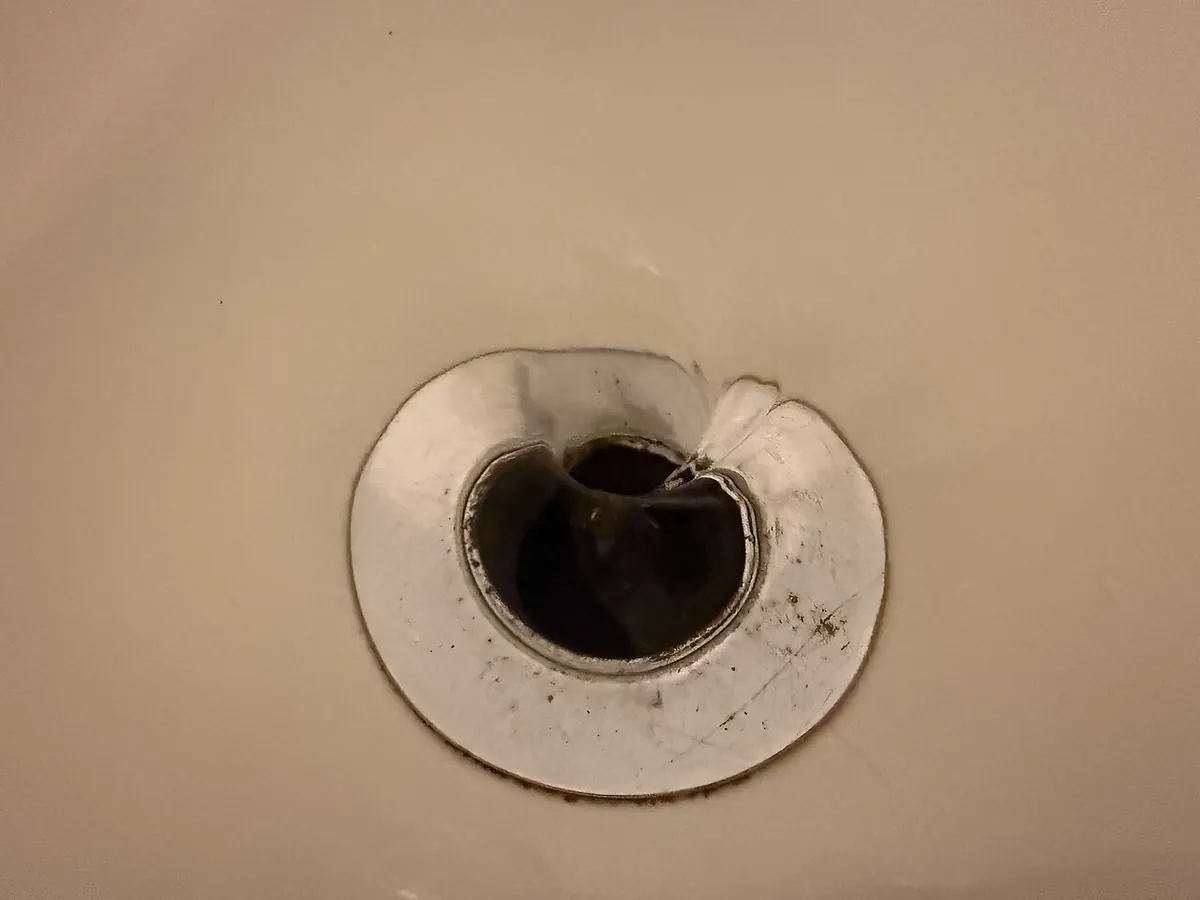
The bathtub is the drain people clear over and over. You pull out a gray clump of hair, the water goes down, and a few weeks later you're showering ankle-deep again. That pattern usually means some of the clog is below the stopper: hair and soap scum packed into the stopper linkage, the trap under the tub, or the line beyond it. Here's how tub clogs form, the three places they hide, and what keeps them from coming back.
First: is it only the tub?
If the tub is the only slow drain, the problem is in the tub's own drain and trap. But the tub is often the lowest drain on its side of the house, so it's where a main line backup shows up first. If the tub fills or gurgles when you flush a toilet or run the washing machine, the main sewer line or a shared branch is the likely problem, not the tub. Stop running water and see what to do when the main line backs up and why a main line keeps backing up. For a one-time clog, start with our shower and tub drain guide or how to unclog a drain without chemicals. This post is about the clog that keeps coming back.
1. Hair and soap scum: the mat that keeps growing
Hair alone usually washes away. What holds it in place is soap scum, the waxy film left when soap mixes with minerals in the water. Hair snags on the drain crossbar or stopper, scum coats it, and the next hair sticks to that. Conditioner, body oils, shaving cream and bath products add to it. A drain strip pulls out the top of the mat, but the rest stays farther down and catches the next batch.
Hard water makes it worse. Burbank Water and Power's 2025 water quality report lists an average hardness of 286 parts per million (about 16.7 grains per gallon), with sources ranging from 148 to 300. That's hard water. Calcium and magnesium react with bar soap to make more scum, and mineral scale makes the inside of older pipes rougher, so hair and scum grab on more easily. A water softener helps, but it isn't required to keep a tub draining.
2. The stopper and the overflow
Tub stoppers come in a few styles. Each one has a hiding place:
- Toe-touch and lift-and-turn stoppers screw into a crossbar inside the drain. Hair wraps around the post and the crossbar right under the stopper. Unscrew the stopper and clean it every month or two.
- Trip-lever stoppers (a lever on the overflow plate, no visible stopper) use a plunger or linkage that hangs down inside the overflow pipe. Hair builds up on it, and a plunger set too low blocks part of the flow even when the drain is "open." Remove the two screws on the overflow plate, pull the linkage out, clean it, and adjust it.
- Pop-up stoppers have a rocker arm that runs from the overflow down into the drain, and that arm collects hair along its whole length.
When you plunge a tub, stuff a wet rag in the overflow opening or cover it with tape first. Otherwise the plunger just pushes air out the overflow.
3. The trap and the pipe under the tub
Below the tub there's a trap, usually under the floor, and then a branch line that joins the rest of the house's drains. A clog that keeps coming back after you've cleaned the stopper and linkage is usually down here, out of reach of a drain strip.
Older Burbank, Glendale, North Hollywood and Van Nuys homes add two problems. Some have a drum trap, an old round canister trap under the bathroom floor that collects hair and scum and often has a cap you can only reach from underneath. Many have galvanized steel or cast iron drain pipe that gets rough and narrow as it rusts and scales up, which holds buildup far better than smooth plastic pipe. Our pipe material guide explains how older drain pipes age. Gurgling can also point to a vent problem; our gurgling drains guide explains how to tell.
What a plumber does about it
For a tub, a plumber usually pulls the overflow plate and runs a drain cable down the overflow pipe, through the trap and into the branch line. Going through the overflow gets the cable past the tight bends at the drain itself. That cuts through the mat and gets water moving, usually in one visit, with no chemicals. Our drain cleaning page covers how we work. You can try a short run yourself with a hand auger (see how to use a drain snake), but drum traps and old metal pipe are where a hand snake usually stops.
Skip chemical drain openers in a tub. They do little to hair, they sit in the tub if the drain is fully blocked, and they're hard on older pipes and on tub finishes. If you've already poured some in, say so before anyone opens the drain. If the same tub clogs every few weeks even after a proper cleaning, a camera inspection can show whether the pipe itself is the problem, and plumbing repairs covers replacing a bad section or an old drum trap.
What it costs to clear a bathtub drain in LA
These are published ranges from LA-area plumbers and cost guides. They're a sanity check, not a quote.
| Job | Published LA-area range | Source |
|---|---|---|
| Bathtub or shower drain cleaning | $250–$500 | Angi (Los Angeles) |
| Bathtub or shower drain cleaning | $250–$500 | Plumbing Connection LA (cost guide) |
| Bathroom sink or tub drain | $100–$225 | A+ Electric & Plumbing (LA) |
| Bathroom drain or shower | $100–$175 | Expertise Plumbing (LA) |
| Single fixture (sink, tub, shower or toilet), Glendale & Burbank | $150–$350 | Alpha-Beta Plumbing (cost guide) |
| Single fixture clearing, LA & SFV | $145–$295 | Last Drop Plumbing (Reseda) |
At Rooter Pros, sink, tub and toilet drains get a free estimate: call (818) 669-9019 and you get the price before any work begins. New customers can also ask about our $49 first-time drain cleaning coupon: new customers only, one per household, one drain or line per visit, residential only, Monday–Friday 7am–5pm, accessible ground-level cleanout required, not valid with other offers. It's a new-customer special, not our regular rate. See our pricing page and the drain cleaning cost guide for more.
How to keep it from coming back
- Use a hair catcher that fits your drain and empty it into the trash after every few showers.
- Clean the stopper or the trip-lever linkage every month or two, before it's slow.
- Brush long hair before you shower, and keep pet hair, sand and mud out of the tub, or use a catcher when you wash the dog.
- Use less bar soap and bath oil, or switch to liquid body wash, which leaves less scum in hard water.
- Flush with hot tap water after baths. Skip boiling water, which can hurt older plastic pipe and tub finishes.
- Note the dates. If the tub clogs on a steady schedule anyway, the trap and line need a real cleaning or a look with a camera.
When to call
Call a plumber if the tub fills when a toilet flushes or the washer drains, more than one drain is slow at once, the clog comes back within weeks of cleaning the stopper, water is leaking through the ceiling below the bathroom, or you smell sewage at the drain. And if you've already used a chemical opener, say so before anyone opens the drain.
Bathtub clogged again in Burbank, Glendale or the Valley? Rooter Pros clears tub drains through the overflow, the trap and the line beyond it, and tells you what's causing the repeat clogs. Licensed & bonded (CSLB #917630), open 24/7, with free estimates, flat-rate pricing and no overtime charges.
Call (818) 669-9019Prices in the table are typical published ranges from other Los Angeles-area plumbers and cost guides as of October 2026. They are not Rooter Pros quotes and change over time. Your price depends on your home. Sources are linked in the table. Water hardness figure from Burbank Water and Power's 2025 water quality report; other cities' water differs.