If a sink, tub or shower drained fine before your remodel and is slow or backing up right after it, construction debris in the line is the first suspect. Tile grout, thinset mortar, plaster and drywall joint compound all look harmless when they're thinned out in a bucket of rinse water. Down a drain, the solids settle out and harden, and they don't flush away on their own.
Why remodel debris clogs drains
Grout and thinset are cement products. The supplier Mosaic Art Supply puts it plainly: grout and thinset mortar are types of concrete and should never be rinsed down drains, including the muddy water from rinsing buckets and trowels. The sand is heavy, so it drops out in the trap and in low or flat spots of the pipe, and the cement keeps curing even under water.
Drywall mud behaves differently but ends up in the same place. The safety data sheet for ProForm joint compound says to avoid washing material down drains because "this material will eventually set and can cause clogs," and Westpac's powdered joint compound sheet says do NOT discharge into any drains or sewers. Powdered "hot mud" is designed to harden chemically, so once it's in a trap it stays there.
The worst offenders on a typical job:
- Grout and thinset rinse water from cleaning sponges, buckets, mixing paddles and trowels in the tub or a utility sink.
- Joint compound and plaster from washing pans, knives and texture tools in a sink.
- Tile and stone cutting slurry dumped down a shower or floor drain.
- Loose debris (spacers, tile chips, caulk, screws) that falls into an uncovered drain while the fixture is out.
Signs it's construction debris
| What you notice | What it usually means |
|---|---|
| Only the remodeled bathroom or kitchen drains slowly | Debris in that fixture's trap or the branch line right below it |
| Gray, gritty sludge or sandy grit when the trap is opened | Grout, thinset or mortar rinse water |
| White, chalky paste or hard white lumps in the trap | Drywall joint compound or plaster |
| A brand-new sink or tub is slow from the first day | Could be debris, or the new trap or drain connection; have both checked |
| Toilets, the kitchen sink and the tub are all slow after the job | Debris carried down into the building drain or main line |
A drain that slows gradually over months is a different problem; see why a drain keeps clogging. If several fixtures react at once, our guide to a main line that keeps backing up explains the main line side.
What to do first
- Stop using the drain. More water won't flush cement or mud through. It can push the loose material further down the line, where it's harder to reach.
- Skip the drain cleaner. Chemical cleaners don't dissolve grout, thinset or joint compound. They just leave caustic water in the fixture.
- Look at the trap if it's easy to reach. Under a sink, with a bucket underneath, a slip-joint P-trap comes off by hand. If it's packed with gritty or chalky material, that's your answer. Keep what comes out, and photograph it.
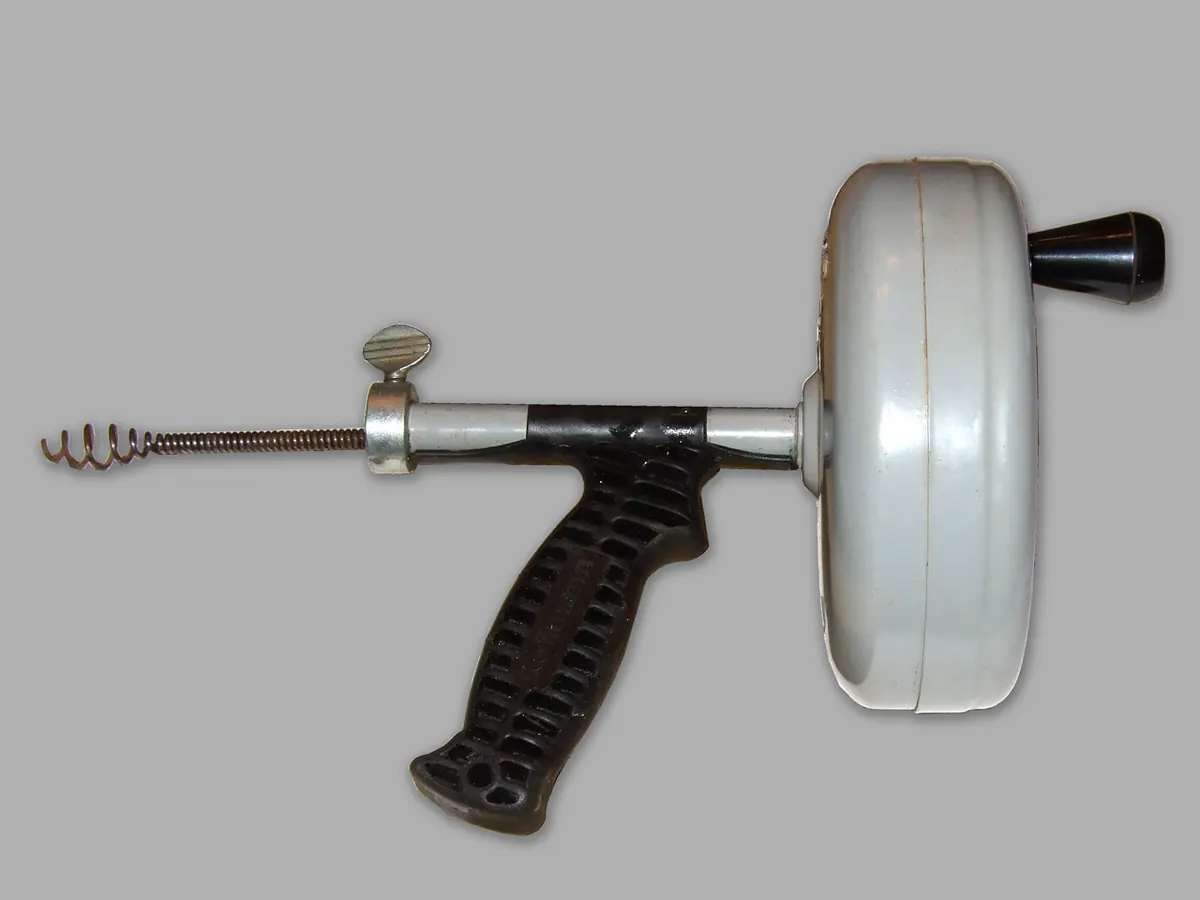
- Don't run a snake into hardened material yourself. A hand auger can pack soft mud tighter or get stuck in set grout. Our drain snake guide covers when a DIY snake makes sense, and this usually isn't one of those times.
- Tell the crew if they're still working. Ask them to plug the drains and stop rinsing tools in any fixture.
- Call a plumber if the drain is still slow after the trap is cleaned, or if more than one fixture is affected.
How a plumber clears it
Most remodel clogs are close to the fixture. The plumber pulls and cleans the trap, then runs a cable through the branch line to break up and pull out what settled there. Soft mud and partly set grout usually come out this way. If several fixtures are slow, the line gets cleared from the sewer cleanout as well.
When cement has fully hardened in a trap or a short run of pipe, replacing that piece is often quicker and cheaper than trying to bore it out. To know where the debris is and how much is left, a sewer camera inspection after clearing shows the inside of the pipe, and the video is a useful record if you need to talk it over with your contractor.
Keep the next project from clogging your drains
- Cover or plug every drain in the work area with a test plug or tape before demolition starts, and keep it covered until the fixtures are back in.
- Never rinse tools or buckets in a fixture. Mosaic Art Supply suggests rinsing outdoors into a disposable container and letting the slurry settle, then pouring off the clear water and throwing the dried solids in the trash.
- Scrape pans and buckets before washing, and let leftover mud or grout dry and go in the trash.
- Take leftover paint to a drop-off. LA Sanitation's S.A.F.E. Centers take paints, stains and solvents free from residents, including the Randall Street center in Sun Valley.
- Run every drain before the final walk-through. Fill and drain each sink and tub and flush each toilet, so a slow drain gets noticed while the crew is still there.
Planning a remodel? Our remodel plumbing page covers the plumbing side of kitchen and bath projects.
What clearing a drain costs in LA
These are published ranges from other LA-area plumbers and cost guides. They're a sanity check, not a quote. Replacing a trap or a section of pipe packed with hardened cement is priced separately, after the line is seen.
| Job | Published range | Source |
|---|---|---|
| Kitchen sink, Los Angeles | $150–$300 | Angi (Los Angeles) |
| Bathtub or shower, Los Angeles | $250–$500 | Angi (Los Angeles) |
| Bathroom sink or tub, Los Angeles | $100–$225 | Elec Plumbing |
| Single fixture clog, LA & San Fernando Valley | $145–$295 | Last Drop Plumbing & Rooter |
| Single-fixture snaking, Glendale & Burbank | $150–$350 | Alpha-Beta Plumbing (cost guide) |
| Main line cleaning, Los Angeles | $250–$1,000 | Angi (Los Angeles) |
| Camera inspection, Los Angeles | $150–$300 | Expertise Plumbing |
At Rooter Pros, a drain clogged after a remodel gets a free estimate: call (818) 669-9019 and you get the price before any work begins, with flat-rate pricing and no overtime charges, day or night. New customers can also ask about our $49 first-time drain cleaning coupon: one clogged drain or line cleared, new customers only, residential, Monday–Friday 7am–5pm, through an accessible ground-level cleanout, not valid with other offers. It's a new-customer special, not our regular rate. Seniors, active military and veterans get 10% off; mention it when you call. See our pricing page and the drain cleaning cost guide for more.
When to call a plumber
Call if a drain is still slow after the trap is cleaned, if you find hard gray or white material in the trap, if more than one fixture is slow, or if a toilet or tub backs up. Call before tiling over or closing up a wall too, if you suspect debris went down an open drain line. It's much easier to clear while the pipe is still reachable.
Drains slow after a remodel in Burbank, Glendale or the Valley? Rooter Pros clears grout, thinset and drywall mud from traps and lines, and shows you what was in there. Licensed & bonded (CSLB #917630), open 24/7, with free estimates, flat-rate pricing and no overtime charges.
Call (818) 669-9019Prices in the table are typical published ranges from other Los Angeles-area plumbers and cost guides as of November 2026. They are not Rooter Pros quotes and change over time. Product handling statements are quoted from manufacturer safety data sheets and a tile supplier's published guidance, and drop-off details are from LA Sanitation's published page. Sources are linked above.