Your main line backs up, a plumber clears it, and a few months later the tub is filling with dirty water again. When that happens, something inside the pipe keeps making new clogs. In older Burbank, Glendale and San Fernando Valley homes, it's almost always one of four things: tree roots, a belly, an offset or broken joint, or grease and wipe buildup. Here's how each works and how to tell which one you have.
First, make sure it's the main line
A main line problem shows up in more than one place: the toilet gurgles when the washer drains, the shower backs up when someone flushes, or water comes up at the lowest drain in the house. One slow sink or tub is usually a branch line, and our guide on why a drain keeps clogging covers that. If sewage is coming up right now, stop running water and follow our main sewer line backup steps first.
What your sewer lateral is probably made of
A lot of houses in Burbank, Glendale, North Hollywood, Van Nuys and the rest of the Valley were built between the 1920s and the 1960s, and many still have the original sewer lateral, the pipe that runs from the house to the city main. That pipe is usually one of three materials:
- Vitrified clay. Short sections with a joint every few feet. Older joints were sealed with mortar or nothing at all, so every joint is a place where roots can get in and sections can shift.
- Cast iron. Common under the house and in the first stretch outside. It rusts from the inside, builds up scale that catches waste, and can crack along the bottom.
- Orangeburg. A tar-paper fiber pipe used from roughly the late 1940s into the early 1970s. Over time it softens, blisters and flattens out of round.
Our clay, cast iron and Orangeburg pipe guide explains how to tell which you have and how each one fails.
1. Tree roots
Roots follow moisture, and a leaky clay or cast iron joint gives off plenty of it. Hair-thin roots work into the joint, then thicken into a mat that catches toilet paper. Cutting them clears the line, but the roots often grow back thicker. The giveaway is a pattern: the main backs up every 6 to 18 months, often around the same time of year. Our tree roots in sewer line guide covers which trees cause it and how the fixes compare.
2. Bellies and sags
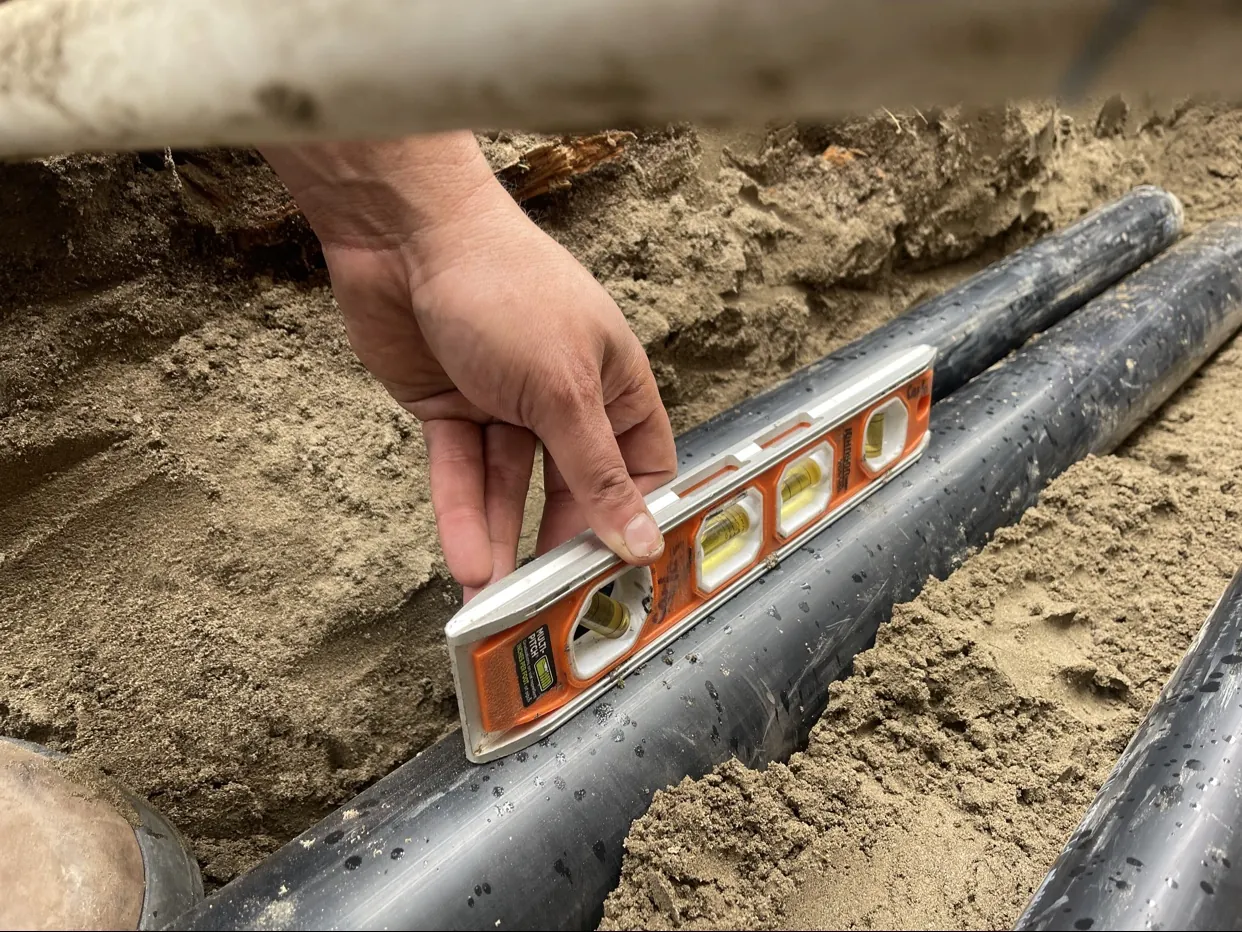
A sewer line needs steady downhill slope. When a section settles, from soft soil, poor bedding when it was laid or old digging nearby, it forms a belly: a low spot that holds water. Solids slow down and settle there, and the line clogs again and again in the same place. A cable goes right through a belly, but no amount of cleaning removes the low spot. On camera, a belly shows up as the lens going under water partway down the line. Full guide: sewer line belly — what a sag looks like on camera.
3. Offset joints and broken clay
Decades of soil movement, root pressure and earthquakes can push clay sections out of line. An offset joint leaves a lip that paper and wipes hang up on. A cracked or broken section lets soil and roots in, and a collapsed one can stop the flow completely. Clearing works until the next pile of paper catches on the same edge.
4. Grease, wipes and buildup
Kitchen grease cools and hardens on the pipe walls. "Flushable" wipes don't break down the way toilet paper does, so they snag on roots, offsets and cast iron scale and build into a plug. This is the one cause you can partly control at home. See what not to flush for the short list.
Why clearing alone may keep coming back
Drain cleaning with a cable through the cleanout is the right first step. It cuts through the blockage and gets the house draining again, usually in one visit. But a cable doesn't change the shape of the pipe. If the cause is a belly, an offset or a break, the clog will come back. If the cause is roots in pipe that's otherwise sound, regular maintenance cleaning on a schedule can be a reasonable, lower-cost plan for years. Some plumbers also offer hydro jetting, which scours the pipe walls with high-pressure water. It doesn't fix a belly, offset or break either, and older pipe should be checked on camera first. Our snaking vs hydro jetting comparison covers the difference.
Camera inspection: stop guessing
Once the line is flowing, a sewer camera inspection shows what's actually in there: the pipe material, which joints have roots, standing water that points to a belly, offsets, cracks, and how far each problem is from the cleanout. With a locator, the plumber can mark the spot and depth on the ground. Ask for the recording so you can get a second opinion before any big repair. See what a sewer camera shows, signs you need a camera inspection and our sewer camera inspection cost guide.
Two local programs can help with the cost. Burbank's Sewer Lateral User Rebate Program (SLURP) gives single-family homes and duplexes a $150 credit on sewer service charges after the lateral is cleaned and video-recorded all the way to the public main. In the City of Los Angeles, LA Sanitation's CCTV rebate pays up to $300 for a lateral video inspection by a licensed and bonded sewer contractor while funds last. Check each program's current rules, including who is allowed to do the work, before you book.
Your options and what they cost
These are published ranges from LA-area plumbers and cost guides. They are a sanity check, not a quote.
| Option | When it makes sense | Published LA-area range | Source |
|---|---|---|---|
| Main line clearing (cable) through a cleanout | Restore flow; roots in sound pipe | $150–$400 | BBC Rooter (Northridge) |
| Main line clearing (cable) | Same | $225–$495 | Last Drop (Reseda) |
| Main sewer line clearing, Glendale & Burbank | Same | $250–$600 | Alpha-Beta Plumbing (Glendale) |
| Main line clearing, cost guide | Same | $250–$1,000 | Angi (Los Angeles) |
| Sewer camera inspection | Any repeat main line backup | $150–$450 (typical $200–$350) | Expertise Plumbing (LA) |
| Cleanout installation | No usable cleanout | $600–$2,000 | A+ Electric & Plumbing |
| Spot repair | One belly, break or offset | $3,000–$8,000 | A+ Electric & Plumbing |
| Trenchless lining | Cracks and root entry, pipe still holding its shape | $6,000–$15,000 | A+ Electric & Plumbing |
| Sewer line replacement | Many defects, collapse, failing Orangeburg | $3,000–$7,000 (40–60 ft) to $10,000–$25,000 (full) | Plumbing Connection LA; A+ |
If you're clearing the same line once or twice a year and the camera shows structural damage, a repair may cost less over time than years of clearings and one bad backup. For the details, see our drain cleaning cost guide, sewer line replacement, trenchless sewer lining and trenchless vs digging. One catch with bellies: lining follows the shape of the old pipe, so a low spot usually has to be dug up and re-laid at the right slope.
What to do next
- Write down the dates of the last few backups. A steady pattern usually means roots; random backups point more toward wipes or a belly.
- Find your cleanout. It makes clearing faster and keeps the job outside. Here's how to find your sewer cleanout. If you don't have one, ask about cleanout installation.
- Get the line cleared, then camera it. Ask for the video and the distance to each problem.
- Pick the fix that matches the cause: maintenance cleaning for roots in sound pipe, a spot repair for one bad section, lining or replacement when the whole line is failing. Our signs your sewer line is failing guide can help you decide.
Main line backing up again in Burbank, Glendale or the Valley? Rooter Pros clears main lines through your cleanout and can follow up with a camera inspection so you can see what keeps causing the backups. Licensed & bonded (CSLB #917630), open 24/7, with free estimates, flat-rate pricing and no overtime charges.
Call (818) 669-9019Prices are typical published ranges from other Los Angeles-area plumbers and cost guides as of October 2026. They are not Rooter Pros quotes and change over time. Your price depends on your home. Sources are linked in the table.