7 signs your sewer line is failing. And what to do next.
Your sewer line rarely fails overnight — it usually sends warnings for months. Here are the 7 signs that matter, four checks you can run yourself in about half an hour, and the one test that settles it: a camera inspection.
Updated October 2026 · Rooter Pros, Burbank-based mobile plumber · CSLB #917630
What you'll need
No tools — just pay attention:
- Your ears — gurgling toilets and drains mean trapped air
- Your nose — sewage smells inside or out mean gas is escaping
- Your yard — soggy or extra-lush strips can trace a leaking line
- A helper — one person runs water while the other watches
- About 30 minutes — walk the house, then the yard
The 7 signs, in order.
One sign is a hint. Two or more is a pattern — and a pattern means it's camera time.
Multiple drains backing up
One slow drain is a clog. The tub filling when the toilet flushes, or the shower backing up when the washer drains — that's the main line, not a fixture.
Gurgling toilets and drains
Air trapped by a break or blockage bubbles back up through the water. Occasional gurgling can be a vent issue; gurgling that keeps happening is a red flag. See what gurgling means.
Sewage smells
Rotten-egg odor from a drain, the cleanout or the yard means sewer gas is getting out where it shouldn't. Don't ignore this one.
Soggy or extra-lush yard patches
A broken line leaks wastewater into the soil. The grass grows suspiciously well over it — or the ground just stays wet.
Slow drains throughout the house
Every drain sluggish at once points past the branch lines to the main. If plunging one fixture changes another, that's the line talking.
Foundation cracks or settling
A long-term leak can wash soil out from under footings or a slab. New cracks in walls or floors deserve a look at what's happening underground.
Clogs that keep coming back
A drain that clogs again every few weeks isn't bad luck — it's buildup, roots or damage deeper in the line. Why drains keep clogging.
4 checks you can run today.
Run them in order. They won't tell you exactly what's wrong underground — but they tell you whether it's one fixture or the main line.
Run the multi-fixture test
Have a helper flush the toilet while the shower or tub runs, and watch the tub, shower and any floor drain. Water rising where it shouldn't, or the toilet bubbling while the tub drains, means the main line is restricted — not a single fixture.
Listen and sniff
Flush each toilet and listen for gurgling in nearby tubs and sinks. Then sniff around floor drains, the cleanout and the yard. Sewer gas escaping where it shouldn't usually means a break, a blockage or a dry trap — our sewer smell guide rules out the simple causes.
Walk the yard
Look along the path from the house to the street for soggy ground, sinkholes, or a strip of grass growing faster and greener than the rest. A leaking line fertilizes the soil above it, so a lush stripe can trace the pipe.
Find the cleanout and look
Locate your sewer cleanout (here's how) and carefully loosen the cap — slowly, with gloves on. Standing water or sewage in the cleanout means the blockage is downstream, between the cleanout and the street. If water starts rising, stop, re-tighten and call.
Stop guessing: get a camera in the line.
Every sign above is a symptom. A camera inspection is the diagnosis.
The exact problem
Break, belly, root mass, offset joint or grease — the camera shows what's wrong on video, and you watch it with us. More on what the footage shows.
The exact location and depth
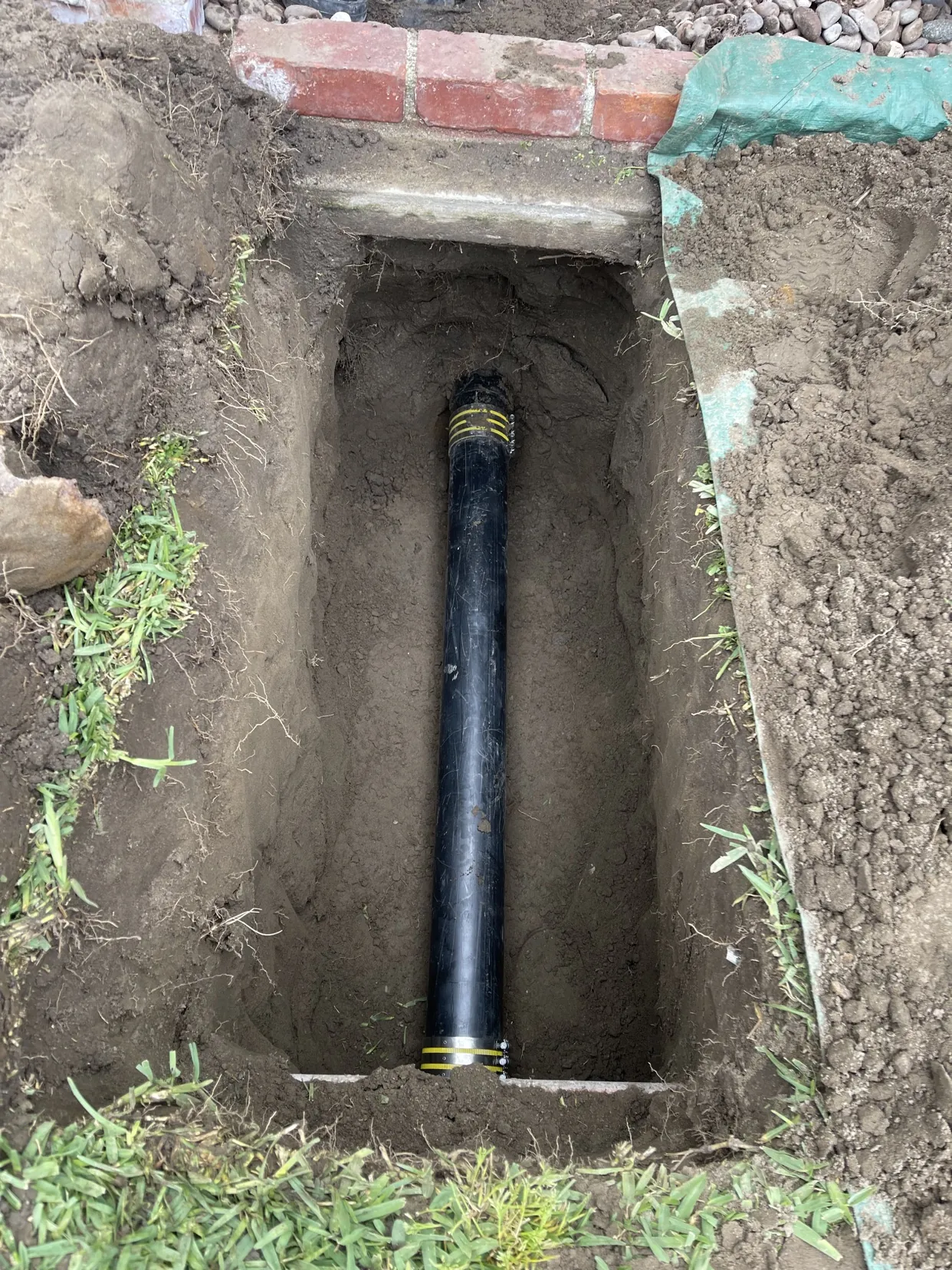
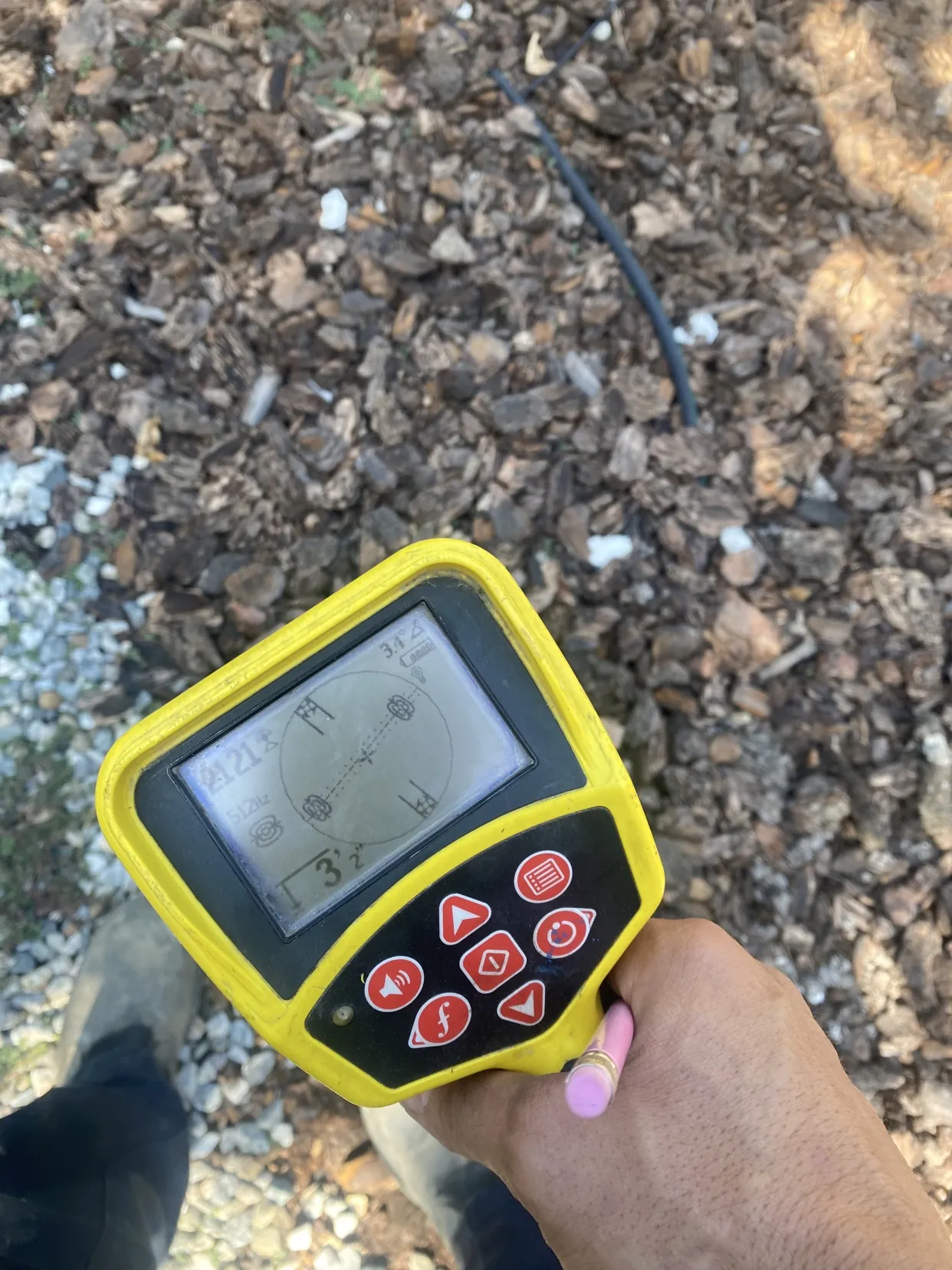
A locator tracks the camera head from above ground. We mark the spot and depth, so if digging is needed it's one hole, not a trench.
The right fix
Spot repair, hydro jetting, trenchless lining or replacement — the fix follows the footage. Trenchless vs. digging explains the trade-offs.
A note for older Valley and LA homes
Many homes in Burbank, Glendale, Pasadena and the San Fernando Valley still have their original clay or cast-iron sewer laterals. Those materials fail in predictable ways — roots at the joints, corrosion and scale inside the pipe. Our guide to clay, cast iron and Orangeburg pipe explains what yours is likely made of.
When to call a pro.
Some sewer problems can wait a few days. These can't — or shouldn't:
Two or more signs at once
One sign is a hint; two is a pattern. That's camera inspection time — it's the cheapest certainty you'll buy.
Sewage backing up into the house
That's an emergency. Stop running water and follow our sewer backup steps — we run 24/7 emergency service for exactly this.
You want the no-dig option
Many failing lines qualify for trenchless replacement — new pipe through small access pits instead of a torn-up yard. The camera tells us if yours does.
Rooter Pros is open 24/7 — flat-rate pricing agreed before work starts.
Call (818) 669-9019Sewer line FAQ
Straight answers, no sales pitch.
How do I know if my sewer line is broken or just clogged?
A single slow drain is usually a clog. Multiple fixtures acting up at once — backups, gurgling, smells — points to the main line. A camera inspection is the only way to know for sure.
How much does it cost to replace a sewer line?
It depends on length, depth, access and method — which is why we give free estimates with upfront flat-rate pricing after a camera inspection. Trenchless can cost less overall once you count not tearing up the yard, driveway or patio.
Does homeowners insurance cover sewer line replacement?
Often not — many policies exclude the line itself, though some cover resulting water damage or offer a service-line endorsement. Check your policy, and keep the camera footage; your insurer may ask for it.
Can a sewer line be fixed without digging up my yard?
Often, yes. Trenchless methods — pipe bursting and cured-in-place lining — replace or renew the line through small access points. A camera inspection tells us whether your line qualifies.
Can I keep using my plumbing while I wait?
If only one sign is showing, yes — but go easy on water use and watch for backups. If sewage is coming up anywhere, stop using water and call.
Seeing more than one sign?
If this doesn't work or you'd rather not mess with it, call (818) 669-9019. 24/7 emergency service · Free estimates · Upfront flat-rate pricing