When a plumber says your sewer line is bad, the next question is almost always the same: can you fix the bad spot, or does the whole lateral have to come out? In Burbank, Glendale and older Valley homes, that answer is rarely guesswork. A sewer camera shows whether you have one isolated defect or a pipe that is failing as a system, and that footage is what separates a few-thousand-dollar spot dig from a full replacement.
This guide is the decision, not the full price sheet. For totals and per-foot numbers by method, see our sewer line replacement cost guide for LA. For how each method works, see trenchless vs digging and trenchless sewer lining. If you are still deciding whether the line is failing at all, start with signs your sewer line is failing.
What a sewer spot repair actually is
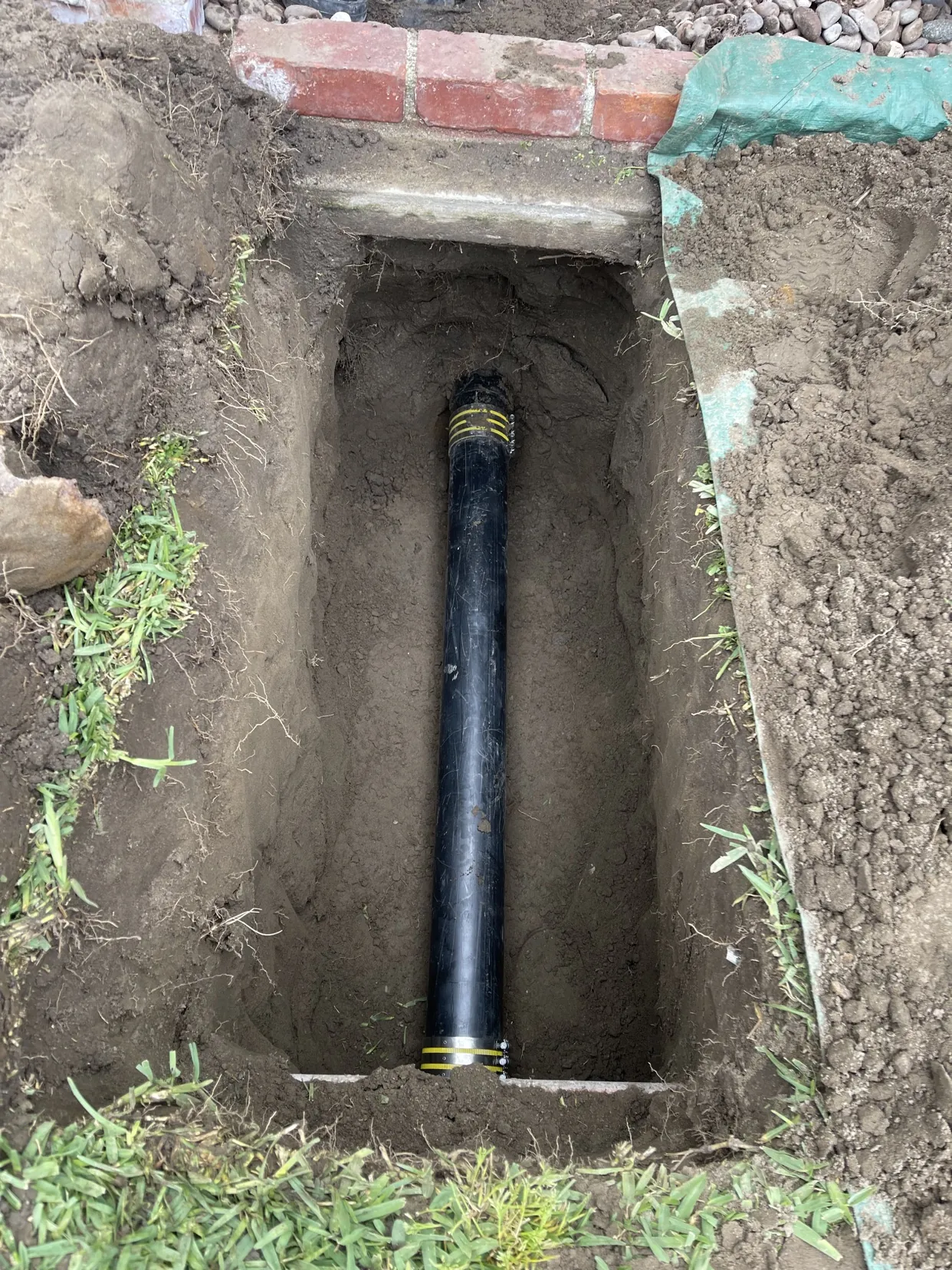
A spot repair means digging (or, less often, lining) only the damaged section and leaving the rest of the lateral in place—one cracked clay length, one offset joint, or one crushed section. The rest of the run has to look sound on camera: still round, still draining, without the same defect repeating.
That is different from a full replacement (rebuild or reline house-to-main) and from a cleaning. Roots or grease in intact pipe often need cleaning first (snaking or hydro jetting as a cleaning method), then a maintenance plan. See why a main line keeps backing up and how often to clean a main sewer line.
When a spot repair is enough
- One defect, clear edges. The video shows a single break, offset or crush, and the pipe before and after looks intact.
- Good grade and round pipe. No long belly (sag that holds water), no reverse slope, no sections that have gone oval or collapsed.
- Material still has life. A short bad stretch of clay or cast iron can be swapped; a thin, scaled cast-iron run that is failing everywhere usually cannot be saved one joint at a time. Pipe types are covered in clay, cast iron and Orangeburg sewer pipes.
- Access that makes a short dig sensible. Soft landscaping over a shallow section favors a spot dig. Under a driveway or patio, you still may choose a spot dig if the defect is truly isolated—just budget restoration.
Local guides make the same point: Alpha-Beta Plumbing's Glendale–Burbank cost guide notes that plenty of "failing" sewers turn out to have one bad section in otherwise serviceable pipe—a spot repair, not a five-figure replacement. Angeleno Sewer Line Repair describes the same pattern: one defect can be fixed; repeating defects point to replacement.
When the whole line has to go
- Repeated defects. Roots at three or four clay joints, or cracks every few feet, mean the joints or barrel are failing as a group. Fixing one leaves the next failures queued up.
- Collapse, severe offsets or pipe out of round. You cannot reliably line or spot-patch a pancaked section; open trench or pipe bursting becomes the honest path.
- Bellies and bad slope. A sag that holds water will keep clogging no matter how many short patches you dig. The bad grade has to be re-laid. That is why the camera matters—see sewer camera inspection and what a sewer camera shows.
- End-of-life material. Orangeburg (bituminous fiber) and heavily corroded cast iron often fail along their length. Spot fixes buy months, not years.
- Math from prior repairs. Two or three spot digs in a few years usually cost more than one planned full replacement. Local guides warn about stacking $1,500–$4,000 repairs until you have spent near a full-line budget and still own old pipe.
Published cost ranges: spot vs full (LA area, 2026)
These are market ranges from other LA-area plumbers and cost guides, checked November 5, 2026. They are a sanity check, not a Rooter Pros quote.
| Path | Published range | Source |
|---|---|---|
| Spot dig repair, one section | $3,000–$8,000 | Alpha-Beta Plumbing (Glendale–Burbank, 2026); A+ Electric & Plumbing |
| Spot dig repair, one section | $1,500–$8,000 | Angeleno Sewer Line Repair |
| Spot repair (Sylmar / Mission Hills area) | $1,500–$4,000 | BBC Rooter |
| Trenchless lining (CIPP), full lateral | $6,000–$15,000 | A+ Electric & Plumbing |
| Trenchless replacement (bursting or lining) | $8,000–$18,000 | Alpha-Beta Plumbing |
| Open-trench or pipe-bursting full replacement | $10,000–$25,000+ | A+ Electric & Plumbing; Alpha-Beta Plumbing |
| Partial vs complete replacement, per foot (Angi LA) | Partial about $50–$90/ft; complete about $80–$120/ft; CIPP $135–$250/ft; bursting $150–$200/ft | Angi, Los Angeles sewer replacement cost (2026 data) |
Angi's surveyed LA average (about $4,091) sits lower than many full-lateral contractor ranges; treat it as a blended figure that includes shorter or partial jobs. Depth, concrete over the defect, hillside access and street work all push a job higher. More on permits and ownership: our replacement cost guide and sewer replacement page.
How to decide with the camera on screen
- Watch the full run to the city main (or as far as access allows) and keep a copy of the video.
- Count the defects. One localized problem favors a spot repair. The same problem repeating favors lining or replacement.
- Ask about grade. Standing water in a belly is a slope problem, not a patch problem.
- Ask which methods the pipe can host. Lining needs a pipe that is still mostly round; bursting needs a path; open trench fixes grade and collapse.
- Get flat-rate options in writing for spot vs full, including permits, restoration and a final camera pass. Free estimates and flat-rate pricing are how we quote; call (818) 669-9019.
Common Burbank, Glendale and Valley scenarios
Clay under street trees. Magnolia Park, Citrus Grove and many postwar Glendale blocks still run clay laterals under mature parkway trees. One root-invaded joint can be a spot dig; roots at every joint usually means plan the full line. See tree roots in your sewer line.
Cast iron under the house or slab approach. Scale and thinning along the barrel rarely stop at one fitting. Spot work is a stopgap.
Hillside laterals. Adams Hill, Glenoaks Canyon and Burbank Hills runs are longer and deeper—get the grade right the first time.
Recurring backups after "fixes." If toilets and tubs back up together after prior cleanings, treat it as structural, not another snake. See emergency plumber and main line backup steps.
Getting a clear recommendation from Rooter Pros
Rooter Pros cameras the line, shows you the footage on site, and gives free estimates with flat-rate pricing for the options that match what the video shows—spot repair, trenchless or open trench. Licensed & bonded (CSLB #917630), open 24/7, no overtime charges. Seniors, active military and veterans get 10% off; mention it when you call (818) 669-9019.
Not sure if you need a spot repair or a new sewer line in Burbank, Glendale or the Valley? We'll camera it, walk you through the video, and quote the honest options in writing. Rooter Pros is licensed & bonded (CSLB #917630), open 24/7, with free estimates, flat-rate pricing and no overtime charges.
Call (818) 669-9019Prices in the table are typical published ranges from other Los Angeles-area plumbers and cost guides as of November 2026; they are not Rooter Pros quotes and change over time. Sources are linked above. Method and decision guidance is general; only camera footage of your lateral supports a repair-vs-replace recommendation.