How to flush a water heater. Get the sediment out.
Hard water leaves minerals behind every time your tank heats. They settle to the bottom as sediment that rumbles, wastes energy and shortens the heater's life. Flushing a standard tank heater is a doable Saturday job — if you do it in the right order.
Updated October 2026 · Rooter Pros, Burbank-based mobile plumber · CSLB #917630
What you'll need
For a standard tank heater:
- Garden hose — long enough to reach a drain, driveway or yard
- Flat screwdriver or pliers — for the drain valve
- Bucket — to check what's coming out
- Gloves — the water and fittings can be hot
- A couple of hours — most of it waiting for the water to cool
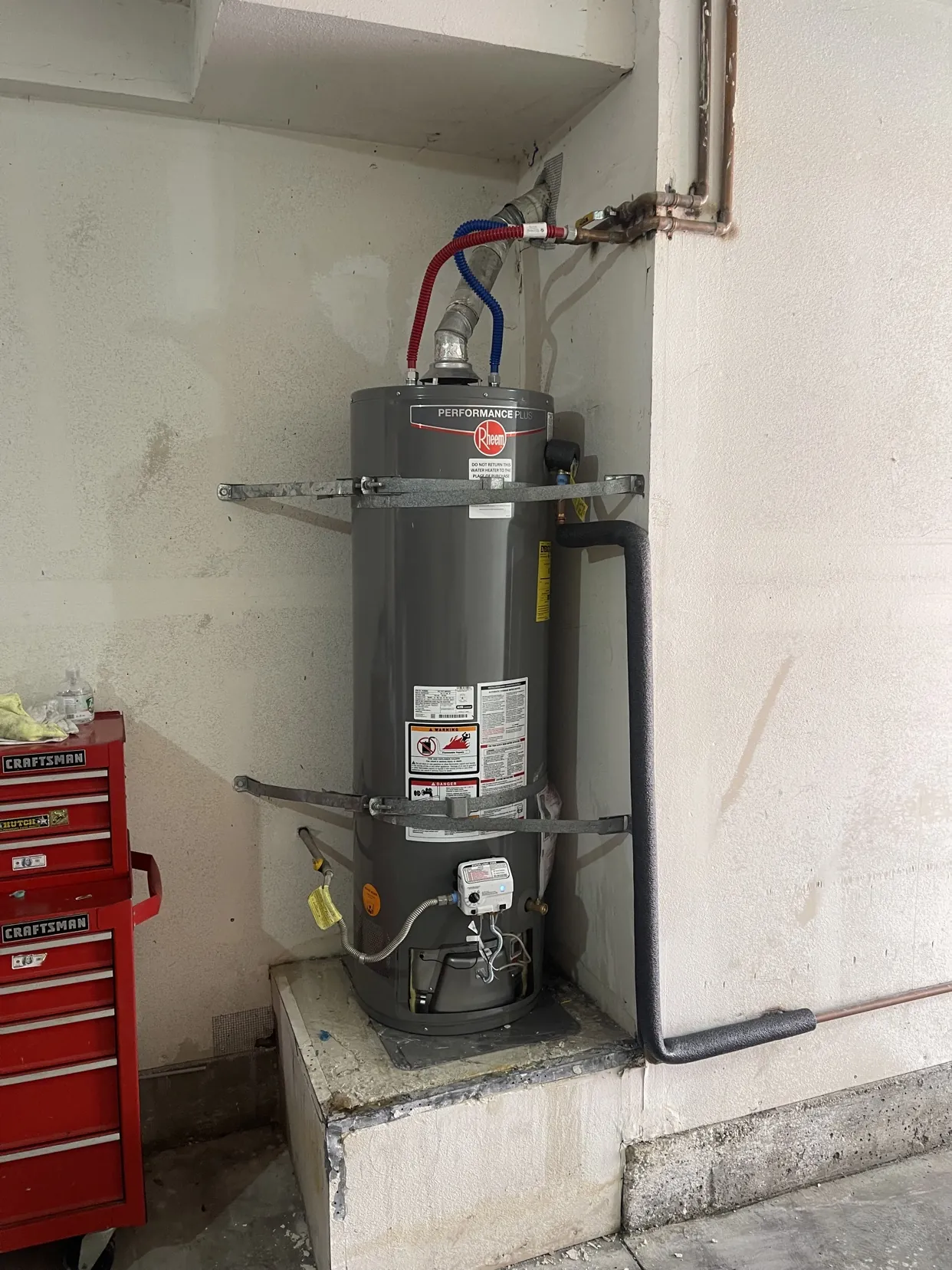
The steps, in order.
Order matters. Power off first, and the tank must be full again before power comes back on.
Turn off the power or gas
Electric: switch off the heater's breaker. Gas: turn the control knob to Pilot or Vacation so the burner won't fire. Running an electric heater with a partly empty tank can burn out the elements.
Let the water cool
Tank water is hot enough to scald. Turn off the heater a few hours ahead — or the night before — and use some hot water in the house so cooler water refills the tank.
Shut off the cold supply
Close the cold-water valve on the pipe going into the top of the heater. Then open a hot faucet somewhere in the house so air can get in and the tank will drain.
Attach the hose and drain
Thread the garden hose onto the drain valve near the bottom of the tank and run it outside or to a floor drain lower than the valve. Open the valve. Run the first water into a bucket so you can see the sediment — cloudy, sandy or flaky white water is normal.
Stir it up and flush
When the flow slows, briefly open the cold supply with the drain still open. The incoming rush stirs up sediment and pushes it out. Repeat a few times until the water at the hose runs clear.
Close up and refill before power
Close the drain valve and remove the hose. Open the cold supply and leave the hot faucet in the house open until water flows steadily with no sputtering air — that means the tank is full. Only then restore power or return the gas knob to its setting, following the label on your heater.
Don't do this.
Flushing is safe when it's done right. These are the ways it goes wrong.
Power on with an empty tank
On an electric heater, the elements need water around them. Restore power only after the tank is completely full and air stops sputtering from the faucet.
Forcing an old drain valve
Many heaters have plastic drain valves that get brittle. If it won't open with gentle pressure, or it won't stop dripping after you close it, stop — a cap on the hose threads is a temporary fix until the valve is replaced.
Draining it hot
Water straight out of a running tank can cause serious burns, and hot water can soften some drain hoses. Let it cool first.
Why LA and Valley heaters need this
Much of Southern California's water is hard, so sediment builds up faster than in soft-water areas. Many manufacturers recommend flushing periodically — check your heater's manual for its schedule. If yours rumbles, pops or runs out of hot water quickly, read 7 signs your water heater is dying before you put effort into an old tank. Tankless heaters need a different service (descaling with a pump and vinegar or a descaling solution) — follow the maker's instructions.
When to call a pro.
Flushing is maintenance. These are signs of a bigger problem:
Water pooling under the tank
A leak from the tank itself — not a fitting — usually means it's rusted through. That can't be patched; it needs replacement. See water heater repair and replacement.
Rusty water or a rotten-egg smell
Rust-colored hot water can mean the tank is corroding inside. A sulfur smell can point to the anode rod. Both are worth a professional look.
Barely any sediment comes out, but it still rumbles
Hardened scale may be stuck to the bottom of the tank. Heavy buildup in an older heater often means replacement makes more sense than repeated flushing.
Rooter Pros is open 24/7 — flat-rate pricing agreed before work starts.
Call (818) 669-9019Water heater flushing FAQ
Straight answers, no sales pitch.
How often should I flush my water heater?
Follow the schedule in your heater's manual. Homes with hard water generally benefit from flushing more often than homes with soft water.
Can flushing an old water heater cause problems?
It can. An old drain valve may not reseal, and stirring up heavy sediment can expose existing leaks. If your heater is old and has never been flushed, consider having a plumber do it.
Why is my water heater making popping noises?
Usually sediment. Water trapped under the sediment layer boils and pops as the burner or element heats it. Flushing often reduces the noise.
Do I need to turn off the gas completely?
Setting the control to Pilot or Vacation stops the burner from firing during the flush. Follow the instructions on your heater's label, and never relight a pilot you're unsure about.
Water heater acting up?
If this doesn't work or you'd rather not mess with it, call (818) 669-9019. 24/7 emergency service · Free estimates · Upfront flat-rate pricing