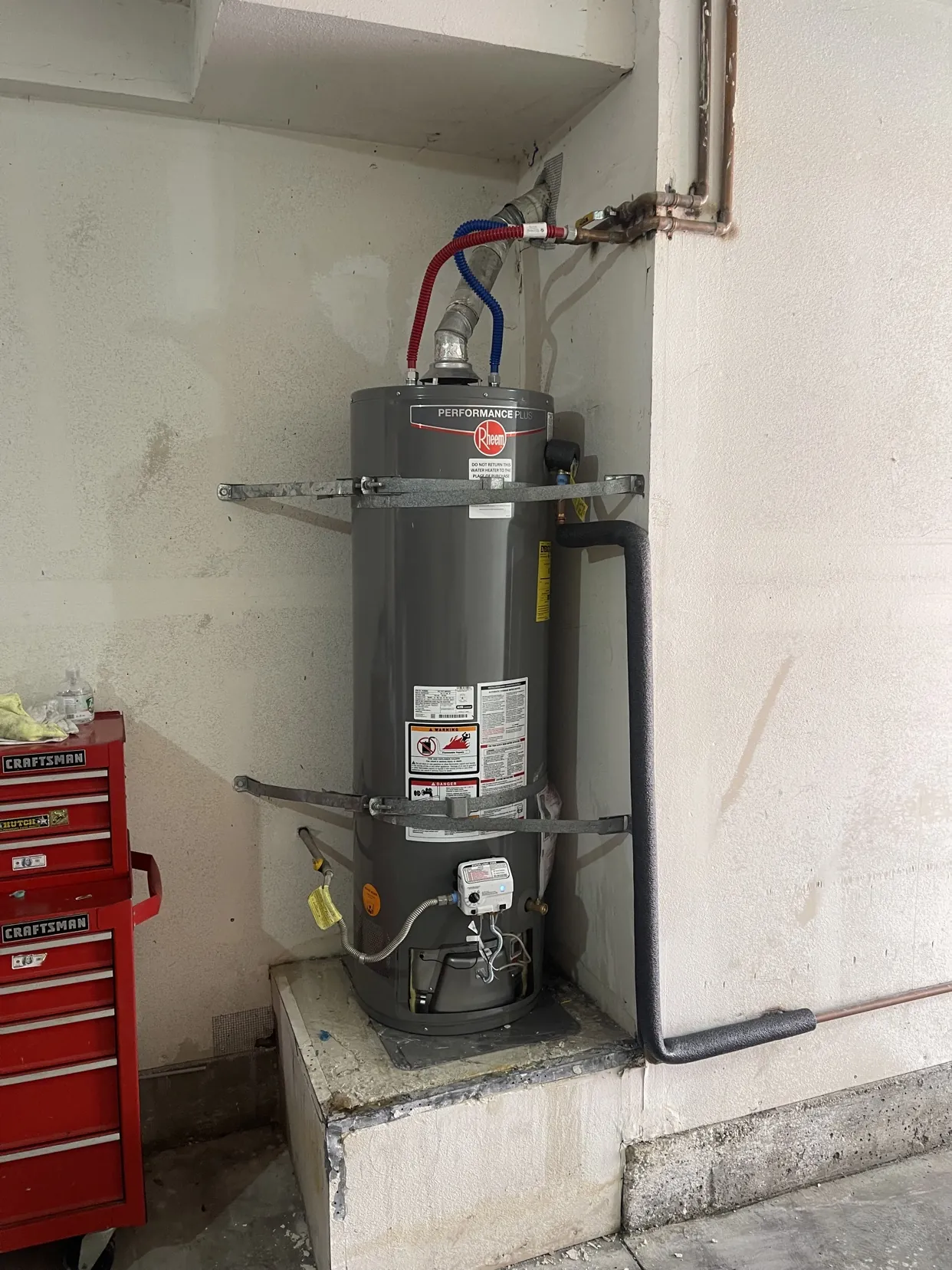
When a tank water heater acts up, the real question is not just what broke. It is whether this heater is worth fixing at all. The answer usually comes down to four things: how old it is, where any water is coming from, what the noise or symptom points to, and how the repair price compares with a new heater. This guide walks through each one so you can make the call with a plumber, not under pressure.
If you are still trying to work out whether something is wrong, start with our 7 signs your water heater is dying. If you already know it needs replacing, our water heater replacement cost guide covers full installed prices. This post is the decision in the middle.
Quick answer: when to repair and when to replace
| Situation | Usually | Why |
|---|---|---|
| Under about 8 years, a single part failed (thermocouple, element, thermostat, relief valve) | Repair | Small part, the tank itself is still sound |
| Leak at a fitting, connector, drain valve or relief valve | Repair | The water is not coming from the tank body |
| Water coming from the tank body or seeping from under the jacket | Replace | A rusted-through steel tank cannot be patched |
| Rusty hot water only (cold runs clear), tank over about 10 years | Replace | Points to corrosion inside the tank |
| Over about 10 years and the repair is a gas valve or several parts | Replace | Repair money goes into a tank near the end of its life |
| Popping or rumbling, younger tank, no leaks | Flush and check | Usually sediment, which a flush can help |
1. Start with the age
Age is the biggest single factor. Cost guides such as HomeGuide put tank water heater life at about 8 to 15 years and tankless at about 10 to 20. In LA, WaterHeaters.com describes an 8 to 12 year service window for typical tanks. Hard water in Burbank, Glendale and the Valley leaves minerals in the tank, so tanks that are never flushed tend to land toward the short end.
To find the age, look at the label on the side of the tank. Many brands code the manufacture date into the serial number (often the month and year as letters or the first few digits), and the brand's website explains how to read it. If the heater was there when you bought the house and nobody knows its age, assume it is older rather than newer.
2. Find out where the water is coming from
A puddle near the heater does not automatically mean a new tank. Dry everything off, then look at these spots in order:
- Supply connections on top: a drip from the cold inlet, hot outlet or flex connectors is a fitting repair.
- Temperature and pressure (T&P) relief valve: water from the relief valve or its discharge pipe can mean a worn valve, or pressure that is too high. On homes with a pressure regulator, a missing or failed expansion tank is a common cause. Do not cap or plug this valve. It is a safety device.
- Drain valve near the bottom: a dripping drain valve can usually be replaced.
- The tank body: water seeping from under the jacket, from the burner area or from the bottom seam with dry fittings above means the steel tank is leaking. That one is a replacement. Our signs your water heater is dying page shows what a tank leak looks like.
If you cannot tell, shut off the cold water supply to the heater and turn the gas control to pilot or off (or switch off the breaker on an electric heater) until it is checked. Our main shutoff guide helps if the heater valve will not close.
3. What the symptom points to
No hot water on a gas heater: often the pilot or the thermocouple, the small sensor that tells the gas valve a flame is present. Olson Superior Plumbing calls it one of their most common calls, and it is usually a modest repair. If the gas control valve itself has failed, the price jumps.
No hot water or short hot water on an electric heater: usually a heating element or thermostat. These are replaceable parts on a sound tank.
Hot water runs out fast or turns lukewarm: a broken dip tube, a failing element, heavy sediment or a heater that is too small for the household. A plumber can usually tell which one with a few checks.
Popping, rumbling or crackling: sediment on the bottom of the tank, which is common in hard LA water. A flush can help a younger tank. On an old tank, the noise often means years of buildup and a tank near the end.
Rusty or brown hot water: run cold water from the same faucet. If the cold is clear and only the hot is discolored, the tank may be rusting inside, especially if the anode rod has worn away. Rusty water from both taps points to the pipes instead, and our repiping page may help.
Rotten-egg smell in the hot water: often a reaction between bacteria and the anode rod rather than a failing tank. Changing the anode type or a disinfecting flush can fix it.
Gas smell near the heater: leave the house, do not use switches or flames, and call SoCalGas or 911 from outside. That is not a repair-or-replace question.
4. Do the cost math
A common rule of thumb, which HomeGuide also states, is to replace a heater that is over about 10 years old or when a repair would cost more than about half the price of a new one. Here are published repair ranges for tank heaters. These are not Rooter Pros prices.
| Repair | Published range | Source |
|---|---|---|
| Thermocouple replacement | $100–$325 (national); $249–$370 (Orange County plumber) | HomeGuide; Olson Superior |
| Thermostat replacement | $100–$350 | HomeGuide |
| Heating element (electric) | $100–$350 | HomeGuide |
| Dip tube replacement | $100–$300 | HomeGuide |
| Pressure relief valve | $50–$300 | HomeGuide |
| Anode rod replacement | $150–$350 (national); $200–$350 (Orange County plumber) | HomeGuide; Olson Superior |
| Gas control valve | $150–$550 (national); $525–$825 (Orange County plumber) | HomeGuide; Olson Superior |
| Most water heater repairs, Van Nuys installer | $150–$450 | The Water Heater Company |
And here is what a new tank heater runs in the LA area, installed:
| Replacement | Published range | Source |
|---|---|---|
| 40-gallon gas, like-for-like | $1,850–$2,400 all-in | WaterHeaters.com (LA) |
| 50-gallon gas with expansion tank | $2,100–$2,700 all-in | WaterHeaters.com (LA) |
| 40-gallon gas, standard install | $1,650–$2,400 | Venta |
| 40/50-gallon gas swap | $1,500–$3,500 | A+ Electric & Plumbing |
A worked example: say a 50-gallon gas tank is 11 years old and the gas control valve has failed. Using the Southern California figure above, the valve could run $525 to $825, against roughly $2,100 to $2,700 for a new installed 50-gallon heater. The repair is about a quarter to a third of the replacement. On a 4-year-old tank, that is a sensible repair. On an 11-year-old tank in hard water, you would be putting several hundred dollars into a tank that may leak next year, so most homeowners replace it. A $150 to $300 thermocouple on the same old tank is a different story, and many people fix it and start budgeting.
5. Other things that tip it toward replacing
- Repeat repairs: a second or third call in a year or two is a sign the heater is wearing out as a whole.
- Code items that would be needed anyway: in LA, a replacement includes seismic straps, an expansion tank on closed systems and a proper relief valve discharge. WaterHeaters.com lists code upgrades on older installs at $180 to $650. If the old setup is missing them, see our earthquake plumbing checklist.
- Rebates: utility rebates can lower the cost of an efficient new heater. See our SoCalGas water heater rebate guide.
- A change you wanted anyway: if you were already thinking about tankless, a failing tank is a natural time to switch. Our tankless cost guide covers the gas line and venting math.
How to make a repair last
If you repair, a few habits help the tank reach the long end of its life. Flush it about once a year in hard water (Drip Too Hard Plumbing in Glendale, for example, advertises an annual flush with anode inspection at $99 promo). Have the anode rod checked every few years. Keep the relief valve working and the area around the heater clear. And if your home has a pressure regulator, make sure the expansion tank is working.
Getting a straight answer in Burbank, Glendale and the Valley
Rooter Pros checks the age, where the water is coming from and what failed, then tells you plainly whether a repair makes sense or whether the money is better spent on a new heater. You get free estimates with flat-rate pricing for both options before any work starts. Licensed & bonded (CSLB #917630), open 24/7, no overtime charges. Seniors, active military and veterans get 10% off; mention it when you call (818) 669-9019. More on our water heater repair and replacement service.
No hot water, a leak or a noisy tank? We will tell you honestly whether to fix it or replace it. Rooter Pros is licensed & bonded (CSLB #917630), with free estimates, flat-rate pricing and no overtime charges.
Call (818) 669-9019Lifespan, repair and maintenance guidance draws on the cost guides and plumbing contractors linked above. Prices in the tables are typical published ranges from other plumbers and cost guides as of November 2026; they are not Rooter Pros quotes and change over time.