How to fix low water pressure. Start at the faucet.
Weak water pressure is usually one of a short list of things: a clogged aerator or showerhead, a valve that isn't fully open, a failing pressure regulator, or old pipes closing up inside. Here's how to work through them in order — cheapest first.
Updated October 2026 · Rooter Pros, Burbank-based mobile plumber · CSLB #917630
What you'll need
Most of this costs very little:
- Adjustable wrench or pliers — wrap the jaws with tape to protect chrome
- White vinegar & a plastic bag — to dissolve mineral scale
- Old toothbrush — for scrubbing screens
- Hose-bib pressure gauge — inexpensive at hardware stores
- A helper — to run water while you check

Work through it in order.
Each step rules something out. Stop when the pressure comes back.
One fixture, or the whole house?
Run cold water at several faucets and a shower. If only one faucet or shower is weak, the problem is at that fixture — go to step 2. If everything is weak, skip to step 4. If only the hot side is weak everywhere, the issue is likely at the water heater or its shutoff valve.
Clean the aerator
Unscrew the aerator from the faucet tip (by hand, or with taped pliers). Rinse out grit, then soak the screen and parts in white vinegar for an hour to dissolve mineral scale. Scrub, rinse and reinstall in the same order.
Descale the showerhead
Fill a plastic bag with vinegar, slip it over the showerhead and secure it with a rubber band so the face is submerged. Leave it a few hours, then run hot water and scrub the nozzles. If it's still weak, unscrew the head and check the small screen or flow restrictor at the inlet.
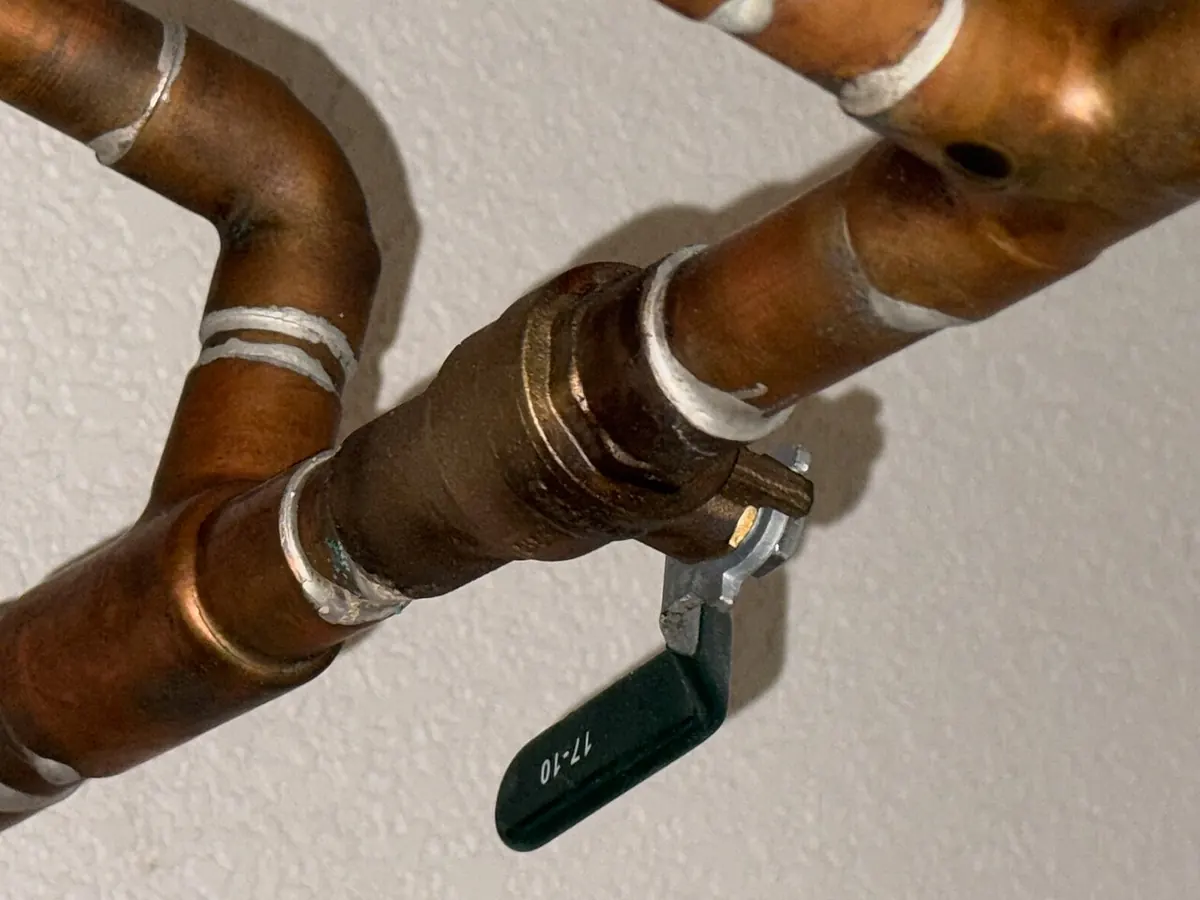
Check the main shutoff valve
Find your main shutoff (here's where to look) and make sure it's fully open — it's common for a valve to be left partly closed after a repair. Don't force a stiff old gate valve; if it won't turn, leave it.
Test the pressure
Screw a pressure gauge onto a hose bib near the main, turn the bib on with everything else off, and read it. Note the number and compare it with what your water utility says to expect for your area. Readings that are low everywhere, or that swing up and down, help a plumber pinpoint the cause.
Look at the pressure regulator
Many homes have a bell-shaped pressure-reducing valve (PRV) on the main line near where it enters the house. These wear out over time and can drop pressure. Adjusting or replacing one is a job we recommend leaving to a plumber, since setting it wrong can stress fixtures and appliances.
What's really behind whole-house low pressure.
If the fixtures are clean and the main valve is open, it's usually one of these.
Galvanized pipes closing up
Galvanized steel pipe rusts from the inside. Over decades the opening narrows until the flow drops — often worse on upper floors and the far end of the house. That's a repiping conversation.
A leak
Water escaping through a leak means less reaches your taps. If pressure dropped gradually and the bill went up, run the meter test.
A failing regulator
A PRV that's wearing out can cause low pressure, pressure that fluctuates, or pressure that creeps too high. A gauge reading tells us which.
A note on hard water in Burbank, Glendale & the Valley
Hard water leaves scale in aerators, showerhead nozzles, cartridges and even the inside of older pipes. If you're cleaning aerators every few months, a whole-home water treatment system may be worth a look. And if pressure in the whole neighborhood drops at once, call your water utility first — it may be a main break or maintenance on their side.
When to call a pro.
Call if the simple fixes didn't do it:
Low pressure everywhere, valve fully open
With clean fixtures and an open main, the cause is in the pipes, the regulator or the service line. We'll test and tell you which.
Pressure dropped suddenly
A sudden drop throughout the house — especially with a wet spot in the yard or a higher bill — can mean a broken line. Check the meter and call.
Banging pipes or pressure that spikes
Pressure that's too high is a problem too: it strains fixtures and can cause water hammer. See banging pipes.
Rooter Pros is open 24/7 — flat-rate pricing agreed before work starts.
Call (818) 669-9019Water pressure FAQ
Straight answers, no sales pitch.
Why is my water pressure low in just one faucet?
Almost always a clogged aerator or cartridge at that fixture. Clean the aerator first; if that doesn't fix it, the faucet cartridge or its supply valve may be the problem.
Why is only my hot water pressure low?
Look at the water heater: a partly closed shutoff valve, sediment in the tank, or scale in the outlet fittings. Flushing the tank can help — see how to flush a water heater.
Can I adjust my pressure regulator myself?
Many have an adjustment screw, but setting it wrong can cause high pressure that damages fixtures and appliances. We recommend having a plumber test and set it.
Will a new showerhead increase pressure?
It can if the old one is scaled up. Keep in mind showerheads have flow limits, so a new head won't fix low pressure coming from the pipes or regulator.
Still a trickle?
If this doesn't work or you'd rather not mess with it, call (818) 669-9019. 24/7 emergency service · Free estimates · Upfront flat-rate pricing