How to unclog a toilet. With or without a plunger.
Most toilet clogs are close to the bowl — in the trap built into the porcelain — and clear with the right plunger and technique. Here's the order we'd try it in, starting with keeping the bowl from overflowing.
Updated October 2026 · Rooter Pros, Burbank-based mobile plumber · CSLB #917630
What you'll need
In order of usefulness:
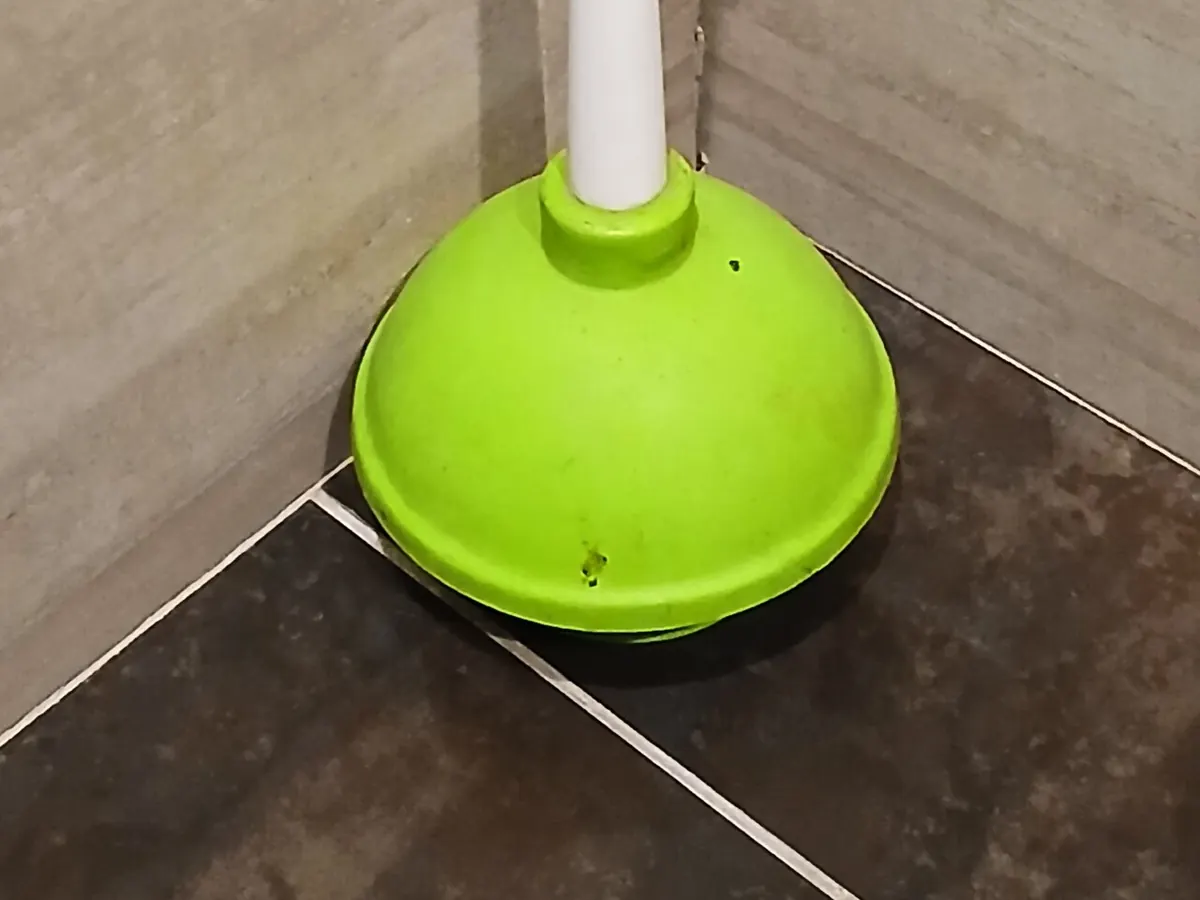
- Flange plunger — the kind with a soft sleeve on the bottom — not a flat sink plunger
- Toilet (closet) auger — a short snake with a protective sleeve
- Dish soap & hot tap water — hot, not boiling
- Gloves & old towels — for the floor around the toilet

The steps, in order.
Stop as soon as the water drains. Most clogs give up at step 3.
Stop flushing
If the bowl is high, don't flush again. Take the tank lid off and push the flapper down to stop water entering the bowl, or turn the supply valve behind the toilet clockwise to shut it off.
Protect the floor
Lay towels around the base. If the bowl is nearly full, bail some water into a bucket so plunging doesn't splash over.
Plunge it right
Use a flange plunger. Fold the sleeve out and seat it in the drain opening so it seals. Make sure there's enough water to cover the cup. Push down gently first to get the air out, then plunge firmly up and down 15 to 20 times, keeping the seal. Pull up sharply at the end. Repeat a few rounds before you give up.
No plunger? Try soap and hot water
Squirt a generous amount of dish soap into the bowl, then pour in a bucket of hot tap water from waist height. Wait 15 to 20 minutes. The soap lubricates and the weight of the water can push a soft clog through. Never use boiling water — it can crack porcelain.
Use a toilet auger
Put the curved end of the auger into the drain opening with the sleeve against the porcelain. Crank the handle while pushing gently until you feel the clog, then work through it and pull back. The sleeve keeps the cable from scratching the bowl — a straightened wire hanger doesn't, and can leave permanent marks.
Test it
Turn the supply back on and flush once with the lid off, hand ready on the flapper. If it drains normally, flush a couple more times to clear the line.
Skip these.
They seem like good ideas. They aren't.
Chemical drain cleaner
Caustic cleaners can sit in the bowl, generate heat and damage seals — and splash on whoever plunges next. They rarely clear a toilet clog anyway.
Wire hangers
Bare metal leaves gray marks inside the bowl that don't come out. Use an auger with a sleeve.
Flushing to test
Every flush adds a tank of water to a bowl that can't drain. Test with the flapper in hand, not by hoping.
When it's not really the toilet
If the tub or shower gurgles or backs up when you flush, or more than one toilet is slow, the clog is in the main line — plunging the toilet won't reach it. Read what gurgling drains mean and what to do in a sewer backup.
When to call a pro.
Call if:
Other drains are involved
Tub fills when you flush, or several fixtures are slow — that's the main line. Our drain cleaning clears it from the cleanout.
Something solid went down
A toy, phone, or hygiene product can lodge in the trap where plunging only pushes it deeper. Sometimes the toilet has to come off to get it out.
It keeps clogging
A toilet that clogs every week may have a problem in the line, or a low-flow bowl with a partly blocked trap. A camera answers it.
Rooter Pros is open 24/7 — flat-rate pricing agreed before work starts.
Call (818) 669-9019Toilet clog FAQ
Straight answers, no sales pitch.
Are flushable wipes safe to flush?
We don't recommend it. Many "flushable" wipes don't break down quickly and are a common cause of clogs. See what not to flush.
What's the difference between a flange and a cup plunger?
A flange plunger has a soft sleeve that fits into the toilet drain and seals. A flat cup plunger is for sinks and tubs and won't seal well on a toilet.
Will a toilet unclog itself?
A clog of toilet paper may soften and pass after a while. Don't count on it, and never keep flushing while you wait.
Why does my toilet clog so often?
Too much paper at once, items that shouldn't be flushed, a partially blocked trap, or a problem in the drain line. If it's frequent, have it looked at.
Toilet still clogged?
If this doesn't work or you'd rather not mess with it, call (818) 669-9019. 24/7 emergency service · Free estimates · Upfront flat-rate pricing